Choosing the right Gear Units can shape a machine’s efficiency, service life, and operating costs. Global buyers often compare more than torque and speed. They examine load patterns, installation space, noise levels, maintenance access, and supplier support. A compact gearbox may fit a conveyor perfectly, yet struggle under repeated shock loads. A larger unit may offer durability but increase energy use and installation demands.
This guide explores the top 10 gear units considered by international industrial buyers. It focuses on practical applications, including conveyors, mixers, hoists, packaging lines, and material-handling systems. Each option is assessed through transmission type, torque capacity, efficiency, thermal performance, protection rating, and replacement-part availability. Real purchasing decisions also depend on local voltage, climate, working temperature, and technician experience. Details matter.
Reliable selection requires evidence. Buyers should review technical datasheets, test results, warranty terms, and documented operating references. Certification can support confidence, but it does not replace correct sizing. No ranking is perfect. Application conditions vary widely. Even experienced engineers can underestimate starting loads or maintenance intervals. This overview therefore presents useful comparisons rather than a universal answer. It encourages buyers to verify calculations with qualified professionals and confirm compatibility before ordering. A sound choice should perform consistently beside a dusty conveyor, inside a humid plant, or beneath a demanding production schedule. That is where specifications become real performance.
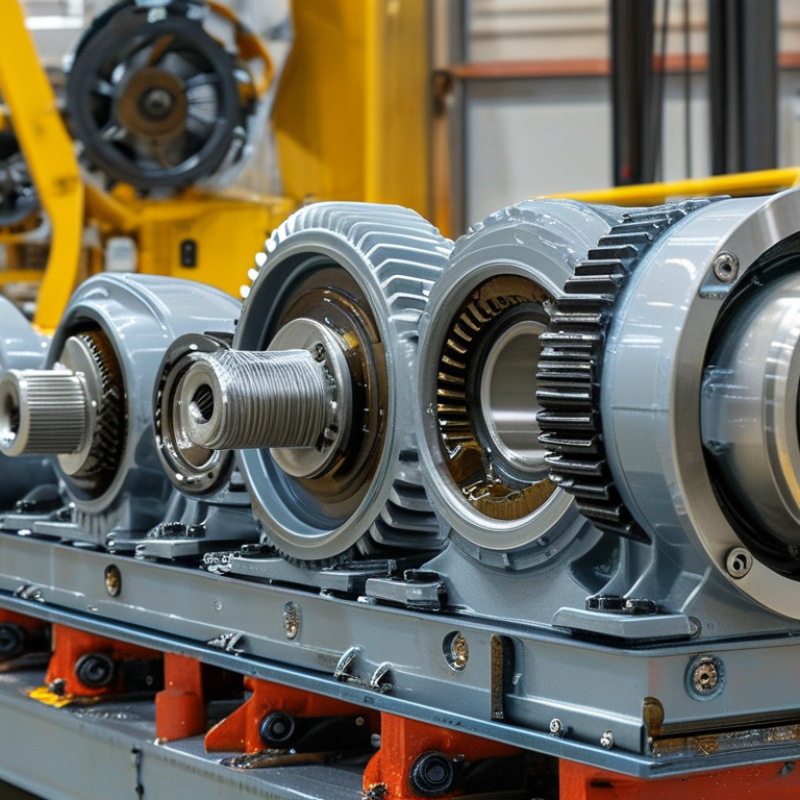
What Are the Top 10 Gear Units for Global Buyers?
Gear units transfer mechanical power through meshing teeth, shafts, bearings, and housings. They reduce speed, increase torque, or change rotation direction. A motor may spin quickly with limited torque. A gearbox trades speed for usable force. Simple, but easy to misunderstand.
The ten common families include spur, helical, bevel, worm, planetary, hypoid, cycloidal, harmonic, rack-and-pinion, and screw gear units. Each suits a different motion problem. Helical units usually provide smooth, efficient transmission. Bevel units redirect power through an angle. Planetary units create high torque in a compact space. Worm units offer strong reduction, but often lose more energy as heat. The choice is never only about ratio.
The International Energy Agency reports that electric motor systems consume about 46% of global electricity. This makes transmission efficiency a serious purchasing issue, not a minor specification. The U.S. Department of Energy also identifies motor-driven systems as major industrial energy users. Buyers should examine rated torque, service factor, thermal limits, lubrication, noise, and expected load cycles. ISO 6336 supports calculation methods for cylindrical gear strength, while ISO 12925-1 classifies lubricants for enclosed gear systems. Standards help, though they do not replace field experience. A unit that performs well in a clean factory may struggle with dust, shock loads, or poor alignment. That part is often underestimated. The top unit is therefore not universal; it is the unit matched to speed, load, environment, and maintenance skill.
| Rank | Gear Unit Type | How It Transfers Mechanical Power | Typical Ratio Range | Typical Efficiency | Typical Output Torque Range | Best-Fit Applications | Key Buying Considerations |
|---|---|---|---|---|---|---|---|
| 1 | Helical Gear Unit | Angled helical teeth engage gradually, transmitting smooth continuous torque between parallel or inline shafts. | 3:1–100:1 | 94%–98% | 50–100,000 N·m | Conveyors, mixers, pumps, packaging equipment, and general industrial machinery | A strong general-purpose choice; check mounting position, service factor, lubrication, and noise requirements. |
| 2 | Bevel-Helical Gear Unit | Spiral bevel gears change the shaft direction, while helical stages increase the reduction ratio and load capacity. | 5:1–400:1 | 92%–97% | 100–500,000 N·m | Right-angle conveyors, bucket elevators, material-handling systems, and process equipment | Useful where high torque and a 90-degree drive arrangement are required; verify shaft orientation and bearing loads. |
| 3 | Planetary Gear Unit | Several planet gears share the load around a central sun gear, producing high torque density in a compact housing. | 3:1–10,000:1 | 95%–99% | 500–10,000,000 N·m | Heavy-duty machinery, wind systems, cranes, mobile equipment, and high-power drives | Offers excellent torque-to-weight performance; precision, thermal management, and initial cost may be higher. |
| 4 | Worm Gear Unit | A worm screw meshes with a toothed wheel to provide large reduction in a compact right-angle arrangement. | 5:1–100:1 | 50%–90% | 10–20,000 N·m | Gates, lifts, conveyors, actuators, positioning systems, and low-to-medium duty drives | Quiet and compact, but sliding contact causes more heat and lower efficiency than most helical designs. |
| 5 | Parallel-Shaft Gear Unit | Helical gears on parallel shafts transmit torque through multiple stages while keeping the drive profile relatively narrow. | 5:1–400:1 | 94%–98% | 100–1,000,000 N·m | Belt conveyors, crushers, feeders, hoists, and large material-handling installations | Well suited to high radial loads; evaluate shaft spacing, overhung load, braking, and foundation requirements. |
| 6 | Coaxial Gear Unit | Helical gear stages are arranged with aligned input and output shafts for efficient inline power transmission. | 3:1–200:1 | 94%–98% | 20–200,000 N·m | Pumps, fans, compressors, machine tools, and compact automated equipment | Provides a clean inline layout; confirm allowable shock loads, output bearing capacity, and motor compatibility. |
| 7 | Cycloidal Gear Unit | An eccentric bearing drives a cycloidal disc against fixed pins, distributing load across several contact points. | 6:1–120:1 | 80%–93% | 50–600,000 N·m | Robotics, indexing tables, machine tools, conveyors, and applications with frequent starts and stops | Highly resistant to shock loads and backlash; inspect allowable input speed, vibration, and lubrication needs. |
| 8 | Shaft-Mounted Gear Unit | The hollow output shaft mounts directly onto the driven shaft, transferring torque without a separate base-mounted coupling arrangement. | 5:1–40:1 | 92%–97% | 100–100,000 N·m | Belt conveyors, bucket elevators, screw conveyors, and space-constrained installations | Simplifies installation and saves space; alignment, torque-arm design, and shaft tolerances are critical. |
| 9 | Extruder Gear Unit | High-capacity helical or bevel-helical stages transmit continuous torque while an integrated thrust bearing manages axial process loads. | 6:1–25:1 | 93%–97% | 1,000–1,000,000 N·m | Plastic extrusion, rubber processing, compounding, and other continuous screw processes | Select according to screw speed, axial thrust, thermal load, duty cycle, and required process stability. |
| 10 | High-Speed Gear Unit | Precision-ground gear stages increase or reduce speed while maintaining controlled tooth engagement at high rotational velocity. | 1.5:1–20:1 | 97%–99% | 100–100,000 N·m | Turbo compressors, generators, test stands, high-speed pumps, and power-generation equipment | Requires careful attention to balance, bearing selection, lubrication quality, vibration limits, and thermal performance. |
: A gear unit transfers mechanical power through meshing teeth, shafts, bearings, and housings. It can reduce speed, increase torque, or change rotation direction. Simple in theory.
Common types include spur, helical, bevel, worm, planetary, hypoid, cycloidal, harmonic, and screw units. Rack-and-pinion and parallel-shaft designs are also common. Classification can vary.
Helical units often provide smooth and efficient transmission. They suit continuous conveying and steady industrial movement. Check the actual load cycle.
Bevel units redirect mechanical power through an angle. They help when the input and output shafts need different directions. Installation space matters.
Planetary units deliver high torque within a compact housing. They suit limited spaces and demanding loads. Their higher cost may not always be justified.
Worm units offer compact right-angle transmission and strong speed reduction. Sliding contact can create more heat and lower efficiency. Cooling becomes important.
Check rated torque, output speed, service factor, backlash, sealing, lubrication, and thermal limits. Record real start-up torque, not only the motor nameplate value. Measure the installation space.
Dust, shock loads, poor alignment, and high temperatures can shorten service life. A clean factory test may not reflect field conditions. Reality is messier.
Efficiency affects heat, electricity use, operating cost, and replacement frequency. Ask for efficiency data at the expected load, not only the best-case rating. That detail is often missed.
Inspect noise, temperature, vibration, lubrication, and torque behavior after three months. Review unexpected overloads and maintenance delays. A smaller unit may save money initially, then disappoint.
Gear Units are mechanical systems that transmit power and torque between rotating shafts while adjusting speed, direction, and output force. This overview explains how they work and how global industrial buyers can evaluate them according to efficiency, load capacity, operating speed, precision, durability, maintenance needs, environmental conditions, and total cost. It introduces ten common types, including spur, helical, bevel, worm, planetary, hypoid, cycloidal, harmonic, rack-and-pinion, and shaft-mounted gear units, highlighting the core operating features and suitable applications of each.
A practical comparison shows that no single design is ideal for every requirement. Some Gear Units prioritize high efficiency, while others provide greater reduction ratios, compact dimensions, precision, shock resistance, or reliable performance under heavy loads. By matching the gear unit’s torque rating, speed range, installation position, lubrication method, materials, protection level, and service conditions with the intended application, global buyers can make informed decisions and select a solution that delivers stable performance, long service life, and better operational value.

 BOXTOP ELECTROMECHANICAL EQUIPMENT